Prairie Pond Mapper
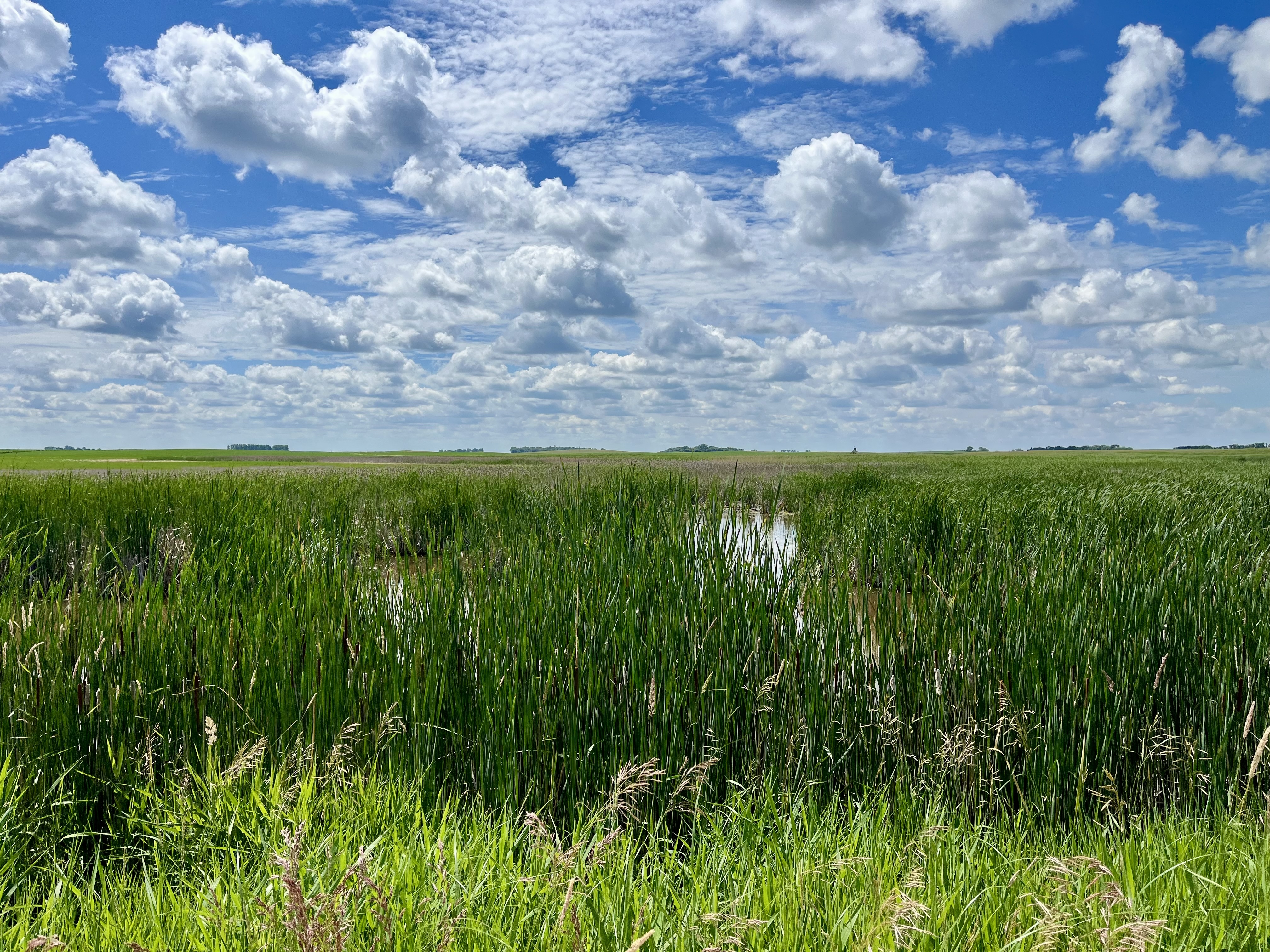
I use remote sensing, AI modeling, and open science practices to map prairie potholes - inland wetlands that dot the Northern Great Plains. The tool I built is called the Prairie Pond Mapper (“PPM”), and is available in Google Earth Engine. Check it out here and find the documentation here.
This project is funded by NASA and done in collaboration with the USFWS and Ducks Unlimited to better inform waterfowl conservation.
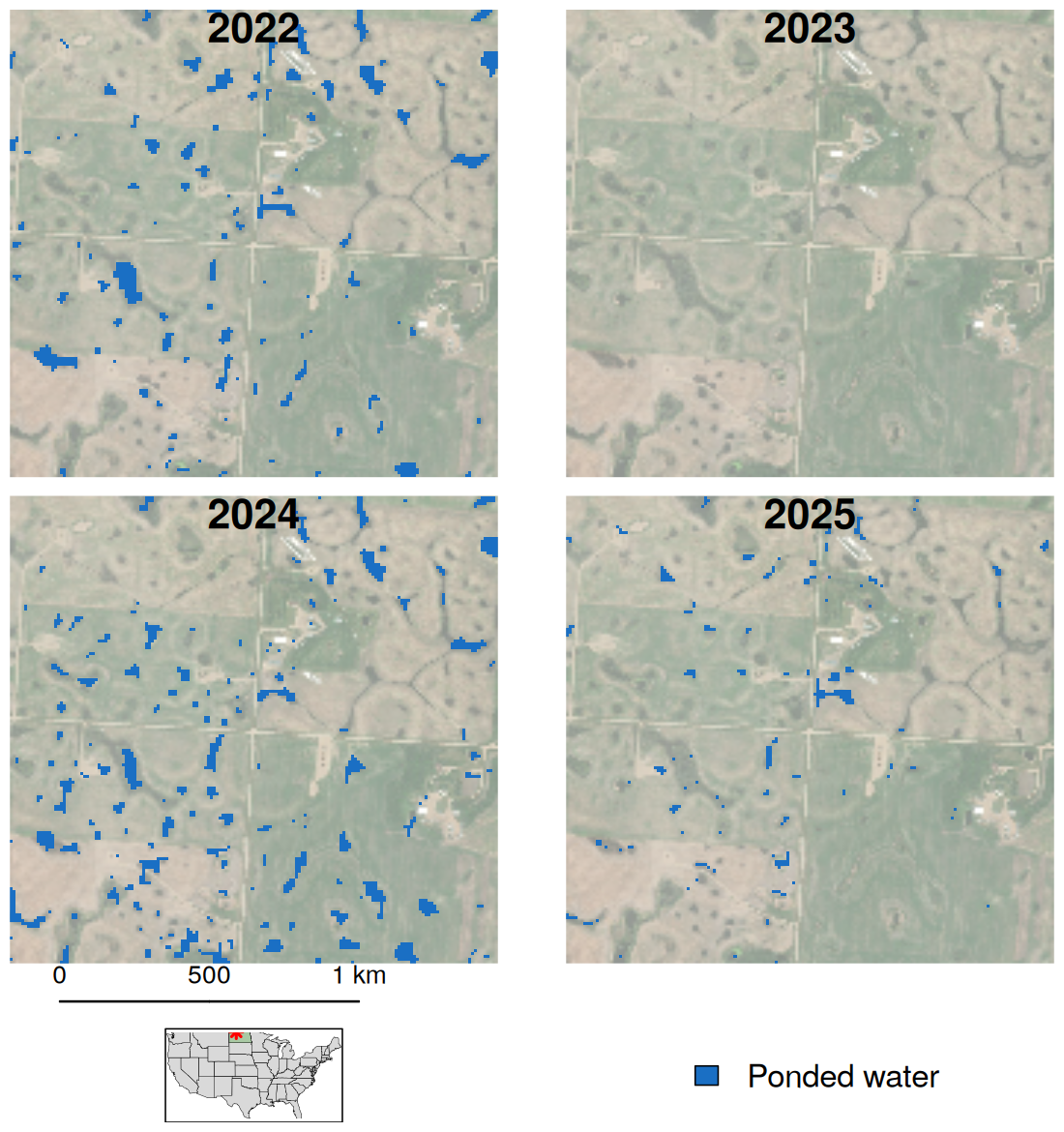
April 1-15
Prairie potholes generally fill with snowmelt and rain, and many dry by fall. But notice how these patterns change from year-to-year.
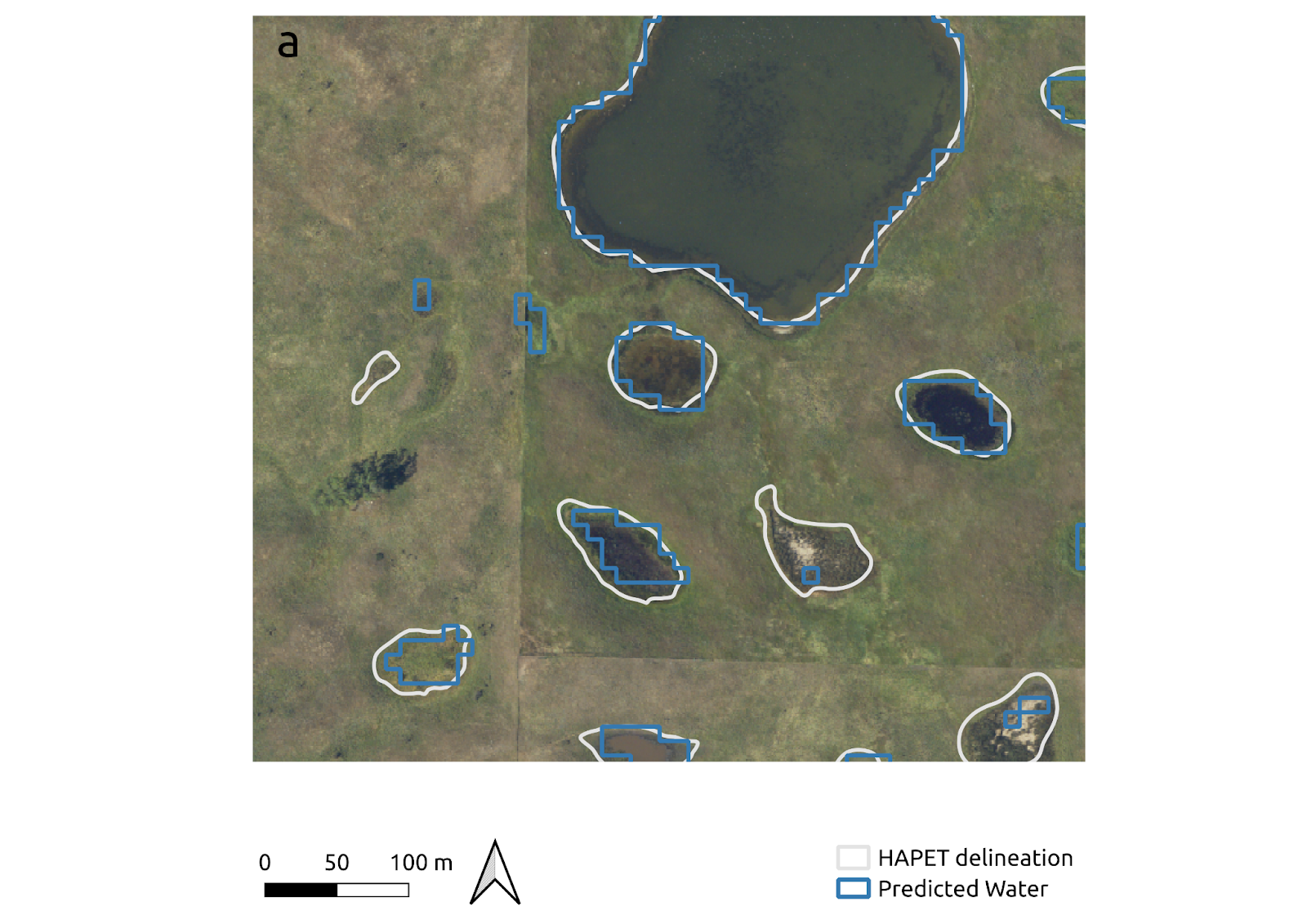
The PPM achieved an omission error of 28% and commission error of 15% when tested in areas and time periods it had never seen before. Notably, the PPM detected 71% of ponds, compared to 34–53% for other models (Global Surface Water, Dynamic Surface Water Extent, Dynamic World).
I’m excited to see how we can keep getting better at finding and understanding these underrepresented, easy-to-miss wetlands!